Lessons · Lesson 1 of 8
- 01 · The six questions a record has to answer
- 02 · The prefix everybody stopped typing
- 03 · Two owners, and therefore none
- 04 · A permission with more verbs than the reason
- 05 · What a version is for, and what it has to keep
- 06 · Both edits were right; one of them is gone
- 07 · Six people, one record, and who pays for the tidying
- 08 · What a rule costs to keep
The six questions a record has to answer
Turn governance into six plain questions, then price a quarter of your own records against them so you can argue for the work with a number.
Lesson 1 of 8 · 15 min
The meeting with no argument in it
Hisham Barakat owns Tanvara Manufacturing. He asked for a governance project in October. He refused it in November. His reason was fair: nobody in the room could tell him what it was worth.
Tanvara runs six sewing lines. The spring book holds thirty-four live styles. Twenty-two are woven bottoms for the brand Halverton. Twelve are knitted tops for Ellendale, a programme won the previous autumn. It is the first programme the factory has ever run in a second category. Hanadi Naguib runs merchandising. After the November refusal she stopped arguing and started counting.
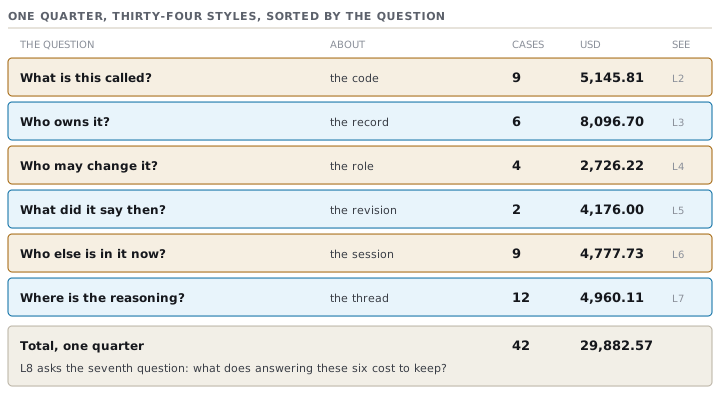
For one quarter she logged every exception raised on those thirty-four styles. She asked one question of each: which question about the record did nobody have an answer to? Not what went wrong — that gives you a list of accidents. Which question. The answers fell into six groups. Those six groups are this whole course.
| The question the record could not answer | Incidents | Cost, USD | Where it is taken apart |
|---|---|---|---|
| What is this called, and is it the same thing as that? | 9 | 5,145.81 | Lesson 2 |
| Who owns this record? | 6 | 8,096.70 | Lesson 3 |
| Who is allowed to change this? | 4 | 2,726.22 | Lesson 4 |
| What did it say on the day we decided? | 2 | 4,176.00 | Lesson 5 |
| Who else is in this record right now? | 9 | 4,777.73 | Lesson 6 |
| Where does the decision about it live? | 12 | 4,960.11 | Lesson 7 |
| Total | 42 | 29,882.57 |
That is USD 878.90 per live style, in one quarter. Not one of the forty-two incidents was caused by somebody being careless, lazy or untrained. Every one was somebody doing the reasonable thing in front of a record that could not answer a question about itself.
Governance is these six questions and nothing else
The word usually arrives with policies, committees and a document nobody reads. Strip all that away. Governance is the set of answers a record can give about itself. Six of those answers matter to a merchandiser:
- Identity. What is this thing called, and can that name be confused with another thing? Lesson 2.
- Ownership. Who is accountable for this record being true — not who types into it. Lesson 3.
- Permission. Who may change what, and what else does that permission quietly carry? Lesson 4.
- Version. What did this say at the moment somebody made a decision from it? Lesson 5.
- Concurrency. Who else is in it right now, and what happens when two people save? Lesson 6.
- Provenance of decisions. Where does the reasoning live, so the next person finds it? Lesson 7.
Course 10.1 sits underneath all six. It owns what a field is: its definition, the date it was true, and whether a blank is honest. It ends by handing over exactly this — two people writing to one field, and who is allowed to change what. 10.1 asks what a value means. This course asks who may change it, what it used to say, and what happens when two people change it at once. If you have not read 10.1, read at least its lesson on the field nobody owns before you read lesson 3 here.
Why the biggest row is not the biggest problem
When you see the table, the instinct is to start with ownership, because 8,096.70 is the largest number. Wait one minute. The table records what happened, and what happened is not the same as what you are exposed to.
Two of the six rows are dominated by a single event. The ownership row is 8,096.70, and 7,310.00 of that is one batch of cloth dyed to last season's standard. The versions row is two buyer claims, and one of them was settled at nothing by pure luck. Lesson 5 prices that honestly. Take both events out and the ranking changes.
Meanwhile the concurrency row is nine incidents at 4,777.73. It is the only row where Hanadi could not say how many she had missed. The other five rows count things somebody complained about. That row counts things somebody noticed, and lesson 6 shows the detection rate was under a third.
What a record is for
There is a reason the six questions are about the record and not about the system holding it.
A record exists to be understood by somebody who was not in the room: a colleague next year, a buyer's quality manager, an auditor, or you in March when you have forgotten. That is much harder than being correct today, and it is the requirement all forty-two incidents failed. The bundle ticket in lesson 2 was correct. The consumption figure in lesson 4 was correct for the marker it came from. Neither could be read by the next person, and you cannot see that defect by looking at the value.
So one test runs through all eight lessons: hand the record to somebody who was not there, and see what they cannot work out. Everything else in this course is a version of that test.
What you will have at the end
Six answers, each with a price. And a seventh thing nobody expects, which lesson 8 is entirely about: what it costs to keep answering them. A governance rule is not free. It takes minutes, every time, from somebody who is not the person it protects. A rule that costs more than it saves is not virtue. It is a slow leak with a policy number on it.
Hanadi's quarter ended with fourteen written rules. A year later, five of them were reported at 96% compliance and were actually followed 41% of the time — and nobody had lied about anything. That is lesson 8, and it is why this course has eight lessons instead of seven.
Check yourselfYour factory has never had one of these forty-two incidents. What does that tell you?Show the answer
Almost nothing, until you know which of the six questions your records can answer. The commonest reason a factory has no incidents in a row is that nothing in that row is ever detected. The concurrency row is the clearest case: a field that is silently reverted leaves a record that reads perfectly. A clean log tells you about your detection, not about your data. Before you conclude you are fine, take five closed orders and try to answer the six questions about each of them from the record alone.