Lessons · Lesson 5 of 5
A claim and its evidence
What per-lot evidence the app asks for, how it decides which lots need it, and what a published product passport actually points a shopper at.
Lesson 5 of 5 · 18 min
What this lesson is about
A garment carries claims. It says what it is made of and where it came from. Sometimes it says part of it is recycled or organic. A claim with no evidence behind it is a marketing sentence. In some markets it is an offence. This lesson is about where the evidence lives in this app: which lots it is demanded for, and what a published passport does with it. Get it wrong and you publish a claim you cannot back up.
Jasur books a fabric delivery against ORD-1427. The purchase order shows a line he has not looked at closely before, telling him this lot will need its own test report.
Which lots need evidence
The application decides per lot, and it decides from the supplier's category rather than from the material.
A supplier categorised as Fabric or Process is treated as involving chemistry: dyeing, printing, washing, coating. So its lots are marked as needing a report. A supplier categorised as Trims or Accessories is not. The reasoning is that packaging and plain trims are covered by the supplier's own standing certificate.
That is a stand-in for the real question, and the app says so. It is right most of the time and wrong in two specific ways worth knowing. A plain undyed greige — fabric straight off the loom, before any dyeing — comes from a fabric mill, so it is marked as needing a lab report it may not need. A reactive-dyed elastic tape bought from a trims supplier is marked as needing nothing, and it went through a dyehouse.
What gets captured, and what counts
Evidence is captured against the goods receipt, one record per receipt. It holds the fibre composition as received, a recycled percentage, an origin country, an attached test report, and notes.
Only the report counts as evidence. The app grades the capture at three levels and is deliberately blunt about the middle one.
| Level | What exists | How it reads |
|---|---|---|
| Not captured | Nothing | Red |
| Partial | Composition, origin or a recycled figure, but no report | "Facts recorded — test report still needed", amber |
| Captured | A test report or transaction certificate is attached | Green |
The difference between the middle and the bottom row is the whole idea. Typing "sixty per cent recycled cotton" into a field is a claim you have written down. The transaction certificate is the thing that makes it true, and until it is attached the record says so.
The two layers matter separately. A supplier's standing certificate — an OEKO-TEX or a recycled-standard scope certificate — covers the supplier, usually for about a year. The per-lot test report or transaction certificate covers this delivery. A claim is backed up only when both exist, and the passport cites the second.
The chase, and what it never does
A received lot that needs a report and has not got one appears on the compliance worklist. It shows amber within a grace window of seven days from receipt, and turns red after that. Lots older than a hundred and twenty days drop off it as historical.
What that worklist never does is stop anything. The stock books, the material issues, the line cuts. This is deliberate, and it comes from the trade rather than from convenience: a laboratory report lags the physical delivery, and blocking the cut until the report arrives would stop the factory for a reason nobody can act on. The worklist chases the missing paper. It blocks the claim at the end, not the goods at the start.
Certificates, sub-suppliers, and what a tick is worth
A supplier's certificates are records with a verified flag. Anyone with the rights can turn it on, and doing so writes a line to the supplier's activity naming them. The row itself does not carry who verified it or when. That is the same shape as the inspection decision in lesson three, one step better because the activity line exists.
The passport's "certified" badge keys off whether any certificate is verified, never off how many are uploaded. An uploaded but unverified certificate is a claim, not proof, and the badge is honest about the difference.
A tier-one supplier — the one you buy from directly — can also declare who it buys from: the spinner, the dyehouse. That declaration deepens the chain a passport can show. It never raises readiness and never proves anything, because it is a disclosure rather than evidence, and the app keeps that line firmly.
What a published passport is
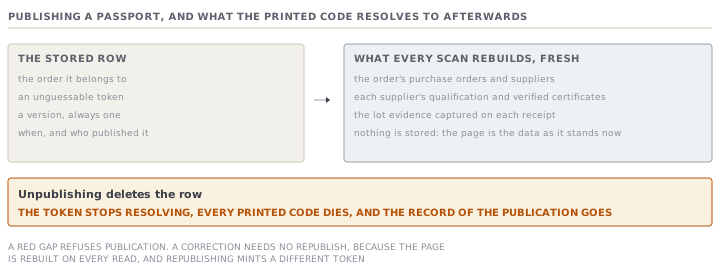
Nigora opens the passport panel on ORD-1427. It is assembled fresh from the order's purchase orders, their suppliers, those suppliers' qualification and certificates, and the lot evidence on each receipt. Nothing is stored. Every read rebuilds it.
Gaps are named rather than scored. An unqualified supplier is amber. A lot that needs a report and has not got one is red. A recycled percentage recorded against a lot with no report attached is also red, and that is the safety net that catches what the dead rule missed.
A red gap blocks publishing. You cannot publish a claim you cannot back up. That is the correct behaviour, and it is worth stating plainly to anyone who asks why the button is refusing.
The readiness figure needs reading carefully. It counts materials that are either backed up or exempt, over the total. So an order sourced entirely from trim suppliers reads a hundred per cent ready with no evidence in the system at all. That is honest by its own definition, because nothing on it needed backing up. But it is not the sentence a compliance officer hears when somebody says the passport is fully ready.
Publish, unpublish, and the code on the hangtag
Publishing mints an unguessable token and stores a row holding the order, the token, a version number, the time and the person who published it. The public passport then lives at that token, readable by anybody who has it.
Three things about that row deserve to be known before a hangtag is printed.
The version is written as one and nothing in the application ever increases it. It is a column waiting for a feature.
The passport is rebuilt on every read, so the page a shopper sees months later shows the order's data as it stands then, not as it stood at publication. Correct a supplier record and the published passport changes silently. There is no snapshot of what was published.
And unpublishing deletes the row. Not a flag, not an archive: the row goes. The token stops resolving, so every printed code pointing at it is dead. The record that the passport was ever published goes with it, including who published it and when. Neither publishing nor unpublishing writes a line to the order's activity log. Publish again and you get a new token, so the codes already printed stay dead.
Check yourselfA lot of recycled-polyester trim arrives from a supplier categorised as Trims. The buyer's garment will carry a recycled claim. Where in this app does anybody get asked for the transaction certificate?Show the answer
Nowhere, until publishing. The evidence rule reads the supplier's category, and Trims means no report needed. So the purchase-order line says none is needed, and the compliance worklist never raises the lot. The rule that should have caught it — a recycled claim forcing evidence whatever the category — exists in the code and is never called with the argument that would trigger it. The one thing that will catch it is the passport, and only if somebody types the recycled percentage into the lot capture: a recorded recycled figure with no report attached is a red gap and refuses publication. If nobody types the figure, nothing anywhere notices.
Check yourselfA passport has been live for four months and the hangtags are printed. Ulugbek notices a supplier's country was entered wrongly and wants to correct it, then republish so the change is visible. What should he actually do?Show the answer
Just correct the supplier record. The passport is rebuilt from live data on every read, so the corrected country appears on the public page as soon as it is saved, with nothing to republish. What he must not do is unpublish first. Unpublishing deletes the row that holds the token, and republishing mints a different one, so every printed hangtag would point at a code that no longer resolves. It would also destroy the only record of the original publication — who published it and when — and nothing writes that to the order's activity log either. Republishing is not a refresh in this application. It is a new identity.
Prompt · Audit the claims a product passport is about to make
Before publishing a passport, and before any hangtag carrying its code is printed.
Help me audit a MerchandiserOS product passport before I publish it, and tell me which of its claims are actually substantiated.

I will give you: each material on the order with its supplier and the supplier's category; each supplier's qualification status and whether any of its certificates is verified; the lot evidence captured on each receipt, meaning composition, recycled percentage, origin and whether a test report is attached; and the gaps and readiness figure the panel is showing me.

Remember how the app decides which lots need evidence. It reads the SUPPLIER's category, not the material: Fabric and Process suppliers need a per-lot report, Trims and Accessories do not. The rule that would force evidence for a recycled or organic claim whatever the category exists in the code, but it is never called with the argument that triggers it. So the readiness figure counts a material as fine when it is exempt, not only when it is proven.

Go material by material and tell me which are substantiated by a real report, which are exempt, and which are exempt but should not be because they carry a claim or went through a dyehouse.

Then tell me plainly whether the readiness figure is overstating my position, and by how many materials it does so.

Then list what I must obtain before publishing, naming the supplier and the document for each.

Finally, remind me what publishing does that is irreversible in practice, and what I must never do to a passport whose code is already printed on a hangtag.
AI can make mistakes — check anything you act on.