Lessons · Lesson 3 of 6
- 01 · The system knew where everything was, and what nothing was made of
- 02 · The unit is chosen before it can be captured
- 03 · The tier boundary, and the floor the claim sets itself
- 04 · What a barcode can honestly do
- 05 · Retrofit against capture, and the answer you cannot buy
- 06 · The passport is coming. Build the records first.
The tier boundary, and the floor the claim sets itself
Walk one claim up five tiers of a supply chain, find the two boundaries where nobody has a contract with anybody, and discover the unit the claim was actually made at.
Lesson 3 of 6 · 19 min
Five tiers, two contracts
The recycled-polyester claim on NW-4180 travels down a chain of five parties. Ranmuthu is only one of them, and it has an agreement with exactly one of the others.
| Tier | Party | Has an agreement with | Can name the tier above it |
|---|---|---|---|
| 1 | Ranmuthu Apparel, Horana | Nordwyke, Weilan | yes |
| 2 | Weilan Knitting Mills, Changhua | Ranmuthu, Tongrui | yes |
| 3 | Tongrui Fibres, Taoyuan | Weilan, Haixin | yes |
| 4 | Haixin Polymer, flake | Tongrui, bale traders | no |
| 5 | Collectors and bale traders | Haixin | not applicable |
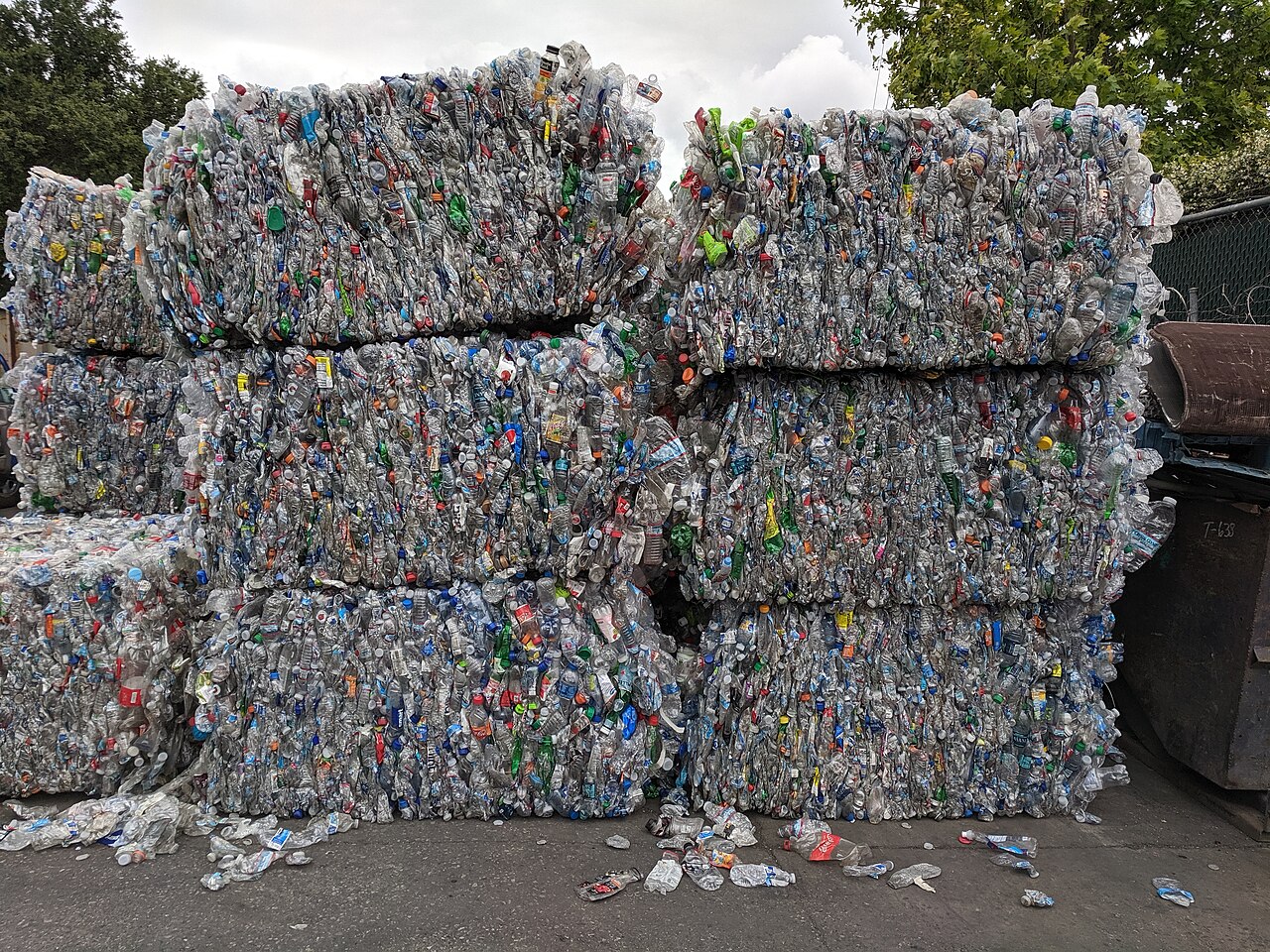
Nordwyke's supply agreement binds Ranmuthu. Ranmuthu's fabric contract binds Weilan, and it contains a flow-down clause — a term that requires the supplier to pass the same obligation on to its own suppliers. Here it requires records to be kept and produced on request. Weilan's yarn contract with Tongrui contains no such clause, because Ranmuthu never asked for one and Weilan had no reason to invent it.
A flow-down clause reaches exactly as far as the last party that agreed to pass it on. Ranmuthu's reached tier 2 and stopped, and everybody behaved correctly.
What asking actually produced
Dinesha asked Weilan a precise question. Which yarn lots fed the 35 dye lots on NW-71408? Weilan answered in nine working days with a clean table: 19 yarn lots, each tied to a delivery note and a knitting date. That is a good supplier answering a good question, and it cost nobody anything.
She then asked Weilan to ask Tongrui which flake batches fed those 19 yarn lots. The answer came back six weeks later. It was not a refusal, an evasion or an apology. It was this:
Our recycled polyester is produced under a mass-balance chain of custody. Recycled and virgin input are melted through the same lines. We can certify the recycled proportion of our output over an accounting period, and we can issue transaction certificates against it. We cannot tell you which input fed a particular lot, because we do not run the plant that way and no record of that kind exists.
That is an honest, competent, audited answer, and it ends the enquiry. There is no further question to ask, no larger fee that unlocks a better one, and nobody to escalate to.
The unit the claim was made at
Now put a number on it, because this is the finding of the lesson.
Tongrui produced 2,860 tonnes of polyester staple in the quarter that covers this order. 1,716 tonnes of it were made from recycled flake, which is 60.0% of the output. Under a mass balance, Tongrui may sell up to that recycled tonnage as recycled, and it is properly reconciled.
Ranmuthu's order consumed 40,320 kg of yarn to make 38,640 kg of finished fabric, a knitting, dyeing and finishing loss of 4.17%. That is 1.41% of Tongrui's quarter.
| Mass | Time | |
|---|---|---|
| The unit the claim was made at | 2,860 tonnes of output | one accounting quarter |
| The unit the question is asked at | one jacket, 0.74 kg | one moment on a shop floor |
The claim's unit is 3.9 million times the mass of the object the question is about. No system Ranmuthu can buy, and no system Nordwyke can buy, closes that gap. It is not a gap in capture. It is the shape of the claim itself.
So the polyester in any particular NW-4180 jacket may be entirely from recycled flake, entirely virgin, or any mixture. Nobody is lying, nobody has failed an audit, and the sentence on the swing ticket is true of the tonnage and untestable on the garment.
The mistake nobody made
Walk the sentence back up. Watch it stay true at every step, and change meaning at every step.
- Tongrui states that 60.0% of its output in the quarter came from recycled flake, and holds the volume reconciliation to prove it. True, and it is about tonnes.
- Haixin certifies the flake it sold Tongrui. True, and it is about flake.
- Weilan passes on the transaction certificate for the yarn it bought. True, and it is about a purchase.
- Ranmuthu puts the certificate in the order file and states that the fabric is recycled polyester. True, and it is about the order.
- Nordwyke prints "recycled polyester" on the swing ticket of every jacket. Now it is about a garment, and nobody made that step deliberately.
Five correct statements and one false implication, produced entirely by copying. There is no villain in this chain and there is no audit finding to raise against anybody. It is the ordinary result of a claim moving downstream faster than the evidence that would carry it.
Check yourselfYour buyer wants a per-item recycled-content statement. You build a perfect trace: piece to bundle to dye lot to roll to yarn lot. Have you solved it?Show the answer
No, and this is the most important thing in the course to get right before you spend money. Your trace can only carry a property that exists upstream to be carried. If the spinner's claim is a mass balance over a quarter, there is nothing attached to any yarn lot for your trace to move, and the finest honest answer stays the quarter no matter how good your factory gets. The trace is still worth building. It makes your quality and chemical answers exact, and it is the thing you need on the day a segregated supply becomes available. But it does not, on its own, produce a per-item claim. To get one you have to buy a different chain of custody, and pay for it.
Prompt · Write the questions that find the smallest quantity my supplier's claim is true of
Before you repeat a material claim to a customer. And before you sign a season with a supplier whose certificate you have read, but whose chain of custody you have never asked about.
Act as a supply-chain compliance manager who has watched a true claim become a false one purely by being copied downstream. I need a question set for one supplier, about one claim. The claim as I currently repeat it to my own customer: [THE EXACT WORDS]. My direct supplier and what it does: [NAME, TIER, PROCESS]. What I already hold: [CERTIFICATES, TRANSACTION DOCUMENTS, DECLARATIONS — list them]. How far up the chain I can currently name parties: [TIER BY TIER, OR UNKNOWN]. Produce five things. First, the single most important question, phrased so it cannot be answered with a certificate: what is the smallest quantity of your output that this claim is true of. Then the follow-ups for each possible answer — a lot number, a production run, an accounting period, or no answer at all — and what each answer means for what I may honestly print. Second, a set of questions establishing which chain-of-custody model sits behind the claim, without using jargon that would let a supplier agree with a word rather than describe a practice: ask how the qualifying and non-qualifying material are stored, whether they go through the same equipment, and what record says which one fed a given output. Third, the questions to ask about the tier ABOVE my supplier, including whether my supplier's own purchase contract requires records to be kept and produced, because a flow-down reaches only as far as the last party that agreed to pass it on. Fourth, the two or three questions that reveal whether the supplier has ever actually been asked this before. Fifth, a short note for my own file explaining, in language a non-specialist manager will accept, why a claim that is true of a tonnage may not be true of one garment, and what my options are if that turns out to be my situation. Do not draft any wording that asserts more than the supplier's answers support, do not invent a certification scheme, and do not tell me a claim is compliant or non-compliant in any particular market — say what evidence would be needed and let me take advice.
AI can make mistakes — check anything you act on.
Where this course stops, and who owns the rest
Two neighbouring courses own the questions this lesson deliberately does not answer.
Course 26.2 owns the same physical problem when a customs administration asks it. Its finding is sharper than anything here, and worth reading before you negotiate. In an origin verification, the administration need not prove your yarn was non-originating. It is enough that your records cannot show it was. That is the same missing link, priced by a different party, with a bill attached.
Course 12.6 owns the demand that arrives at a border about the conditions under which an input was produced, and what a certificate proves. Where this lesson asks at what unit is the claim true, that one asks what actually happened, and can you evidence it.
What is left to this course is the half neither of them covers: the unit, the capture, and what a piece-level demand does to a factory whose finest record is a box.
What you should be able to do now
Take one claim you currently make about a product. Send one email up your chain asking for the smallest quantity of output it is true of. Do not ask for a certificate; you already have the certificate. Ask for the quantity. Then compare the answer to what your own label says. Within a week you will know whether you have a records problem, a sourcing problem, or a wording problem.